
In Summary
- Winter Workshops and Education: The Goulburn Murray Valley Fruit Fly Area Wide Management Program continues its efforts through winter workshops to educate the community, industry, and government on managing Queensland fruit fly (Qfly) habitats.
- Survival of Qfly During Winter: Contrary to popular belief, adult Qfly can survive winter by seeking refuge in warm areas. Proper management of late fruiting plants and removal of leftover fruit can significantly reduce their populations.
- Removal of Unwanted Fruit Trees: The program has removed over 115,000 unwanted fruit trees with community support. Residents are encouraged to remove or manage fruit-bearing plants to prevent Qfly breeding.
- Advice for Gardeners and Growers: Continuous monitoring, trapping, and baiting of Qfly, along with the removal of fallen and late-hanging fruit, are crucial. Approved pesticides can be used as part of an integrated management strategy.
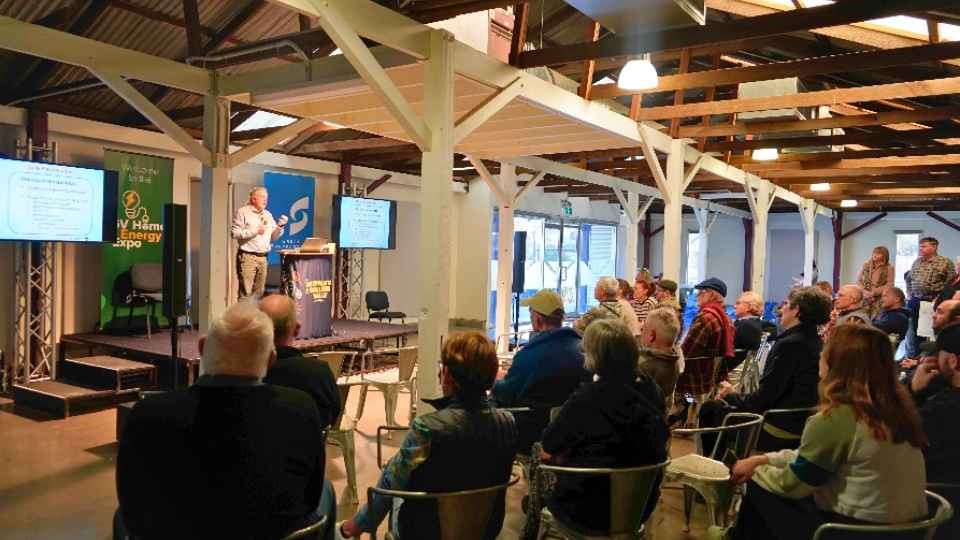
Qfly Area Wide Management workshops will be conducted throughout winter in the Goulburn Murray Valley region to ensure the important education and engagement by the community, industry and government continues.
Recent workshops and information sessions have been conducted in partnership with Greater Shepparton City Council’s Flood Recovery team Resilience in Recovery, Numurkah Baala Creek Festival, Seymour Alternative Farming Expo, local Primary Schools, Shepparton Ethnic Council, community and farmers markets, commercial nurseries and industry/community groups in the region. Qfly management information has also been published in several languages and is available on the program’s website for CALD communities, to ensure the content is accessible by everyone.
Program Coordinator, Ross Abberfield, said while many people assume that all fruit fly die off over winter, this isn’t the case.
“A lot do, but in most parts of Victoria adult flies can survive over winter by seeking refuge in evergreen plants located near houses, packing sheds and fowl houses where ambient temperatures are higher than in deciduous orchards,” he said.
“One of the main reasons fruit flies are able to survive winter is because late fruiting plants are not managed after harvesting, in both rural and urban areas. The left-over fruit accompanied with the benign weather conditions, is the perfect climate for the survival of fruit flies.”
Mr Abberfield said post-harvest removal and destruction of fruit can also be beneficial in reducing orchard disease and controlling other pests.
“Broadening your response to controlling fruit fly and addressing other pests and disease by mulching and bait spraying in orchards and plants situated around farm buildings, will help control fruit fly pests and disease on your farm for the upcoming season,” he said.
“This practice is widely used in stone fruit operations to reduce the occurrence of coprophilous beetle and the occurrence of brown rot.”
Goulburn Murray Valley Program Fruit Fly Researcher, Andrew Jessup from Janren Consulting Pty Ltd, said any Qfly alive in the field during winter will be adults, as eggs and larvae are likely to have died by June.
“There is a very small chance that some larvae may persist in fruit that is located in unusually warm spots like fruiting trees near permanently heated buildings or even in the fruit bowl inside your house. If the day warms up during this time of year, Qfly adults may crawl around or fly in search of food, especially sugar-based nutrients from flowers and aphid honeydew, as well as protein from bacteria, fungi and yeast on plant surfaces,” he said.
“Food-based traps and baits are still effective, especially during warm parts of the day. Such traps and baits can control hungry fruit flies in the backyard and orchard, especially at this time of year. Survival of these adults depends very much on the weather over the next couple of months. If large numbers survive, significant fruit fly problems will likely occur next year.”
How to reduce fruit fly build-up next spring
There are many steps people can take to help reduce Qfly build-up to ensure we are not faced with large numbers next spring. Mr Abberfield said one of the most effective ways of doing this is through the removal of unwanted and unmanaged fruit trees during winter.
“With community support, the Goulburn Murray Valley program has removed over 115,000 unwanted fruit trees that would otherwise be fruit fly breeding habitat. We encourage residents to have a close look at what plants might have fruit on them in early spring and, if you can, pull them out or at least pull the fruit off,” he said.
“This includes fruiting weeds, hedge plants, and fruit trees with late-hanging fruit (e.g. navel oranges). If there are roadside or creek-bank rogue plants such as apricots and loquats, please let your local Council know and ask that these plants be removed.”
Advice to home gardeners and commercial growers
Mr Abberfield said it was important that people are aware of the trees on their properties and what could potentially be growing on them.
“If you have seen evidence of Qfly in your traps in June, it is important to take immediate action to reduce their survival rate in winter and avoid large, damaging populations in the spring. If unmanaged, these flies can survive and spread into neighbouring gardens and commercial orchards as the weather warms up,” he said.
“Removing any unwanted Qfly host plants is an effective way of controlling future fruit fly populations. Don’t forget, fruiting weeds and fruiting plants grow near buildings. Trapping and baiting can be augmented with the application of pesticides, however these must be approved for use against fruit fly in an approved crop and region. All label requirements must be followed.”
Mr Jessup said it was important to continually pick up fallen fruit and harvest late-hanging fruit, particularly in areas that are warm enough for Qfly to survive.
“Winter trapping with protein-based traps should be placed in an area that catches the morning sun, high in the canopy of evergreen trees, in the warmest position in the yard. Lemon trees are particularly favoured by Qfly nest over winter,” he said.
If you live in Greater Shepparton, Moira Shire, Campaspe Shire or Strathbogie Shire and would like an unwanted or unmanaged residential fruit tree removed free of charge, download an application form from the program website or contact your local Council.
For further information about the program, visit www.fruitflycontrol.com or email fruitflycontrol@shepparton.vic.gov.au to receive the monthly fruit fly newsletter.
The Goulburn Murray Valley Fruit Fly Area Wide Management Program is supported by the Victorian Government.